← Back to the FAQ

Water filter straws · The detail

How the filter works.And what the lab found.

What a micron is, how a hollow fiber membrane cleans water, what our independent lab results show, and what the filter is not rated for.

>99.99%E. coli removed (SGS lab test)
>99.99%Legionella removed (SGS lab test)
0.1 µmHollow fiber membrane pore size
01

What is a micron?

A micron (short for micrometer, written µm) is one millionth of a meter. That's one thousandth of a millimeter. Most of what makes water unsafe to drink is measured in microns, which is why you can't see it.
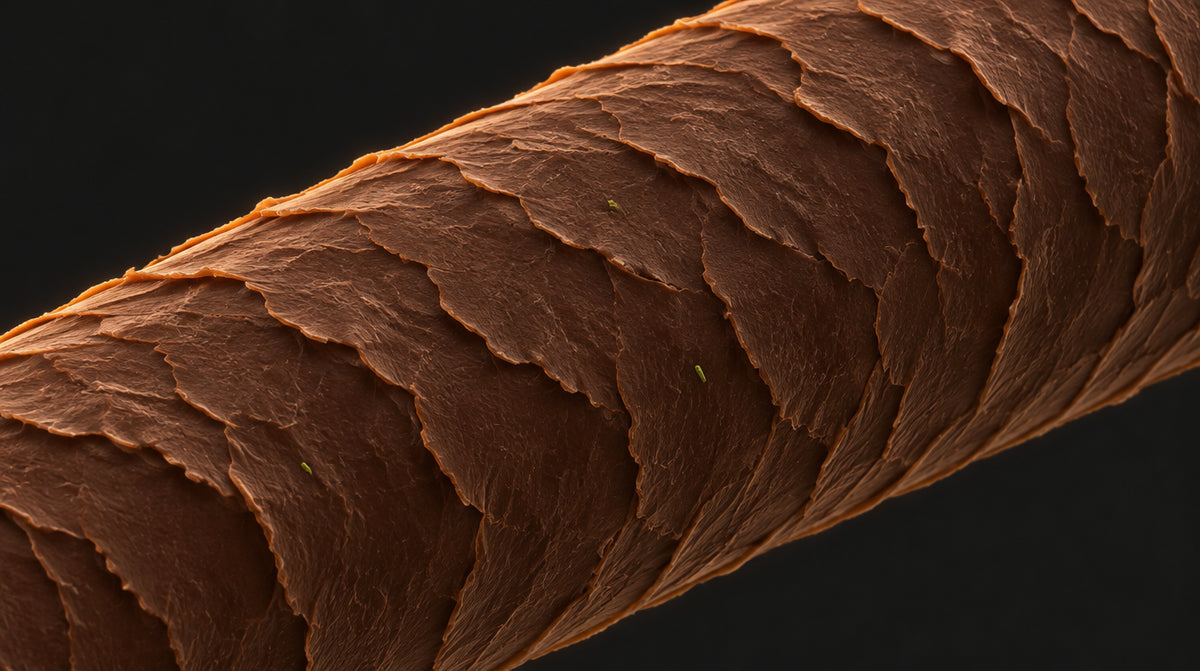
Illustration of a magnified human hair with tiny green bacteria on its surface
The strand: one human hairA typical human hair is around 70 microns wide.
The green specks: bacteriaA bacterium like E. coli is about 2 microns long and 0.5 microns wide. Next to a hair, it's barely a speck.
A 0.5 micron particleThe smallest particle size in our lab test. About 140 of them would fit side by side across that hair.

Illustration. Hair and bacteria sizes are typical reference figures and vary.

02

How the filter cleans water.

Inside each straw is a hollow fiber membrane: a bundle of very thin tubes whose walls are full of microscopic pores, rated at 0.1 micron. It works like a strainer. Water fits through the pores. Anything bigger than the pores doesn't.

There are no chemicals, no batteries and no moving parts. The filtering is purely physical.

Illustration: murky water with sediment and bacteria on the left, a porous membrane wall in the middle that blocks them, and clear filtered water on the right
Unfiltered waterMembrane wallFiltered water
Sediment and particles: blocked at the wall Bacteria: blocked at the wall

Illustration, not to scale. Not shown: viruses and dissolved substances such as salt and chemicals, which are small enough to pass through.

  1. Water goes inSip from the source, squeeze from a bottle, or let a gravity bag push water into the straw.
  2. It meets the membraneThe water is forced against the walls of the hollow fibers.
  3. Big things get stuckSediment, particles and bacteria are too large for the pores, so they stay behind.
  4. Filtered water comes outOnly what fits through the pores reaches the mouthpiece.
03

The lab reports.

Our filters are independently tested by SGS. These are the results pages from the four reports. Tap any one to read the full report.

E. coli (total coliforms)>99.99% removedSGS report SHES221102100871 · Issued December 6, 2022
Legionella>99.99% removedSGS report SHES221202348577 · Issued January 19, 2023
Particles 0.5 and 1 micron and larger99.96% and 99.90% removedSGS report SHES230400712571 · Issued April 22, 2023
Particles larger than 2 and 3 microns99.97% and 99.96% removedSGS report SHES221202348579 · Issued March 20, 2023
04

What it won't do.

A physical filter can only stop what's too big to fit through it. Our filter is not rated for viruses, chemicals, heavy metals or salt water.

Not rated for

  • Viruses. They are far smaller than bacteria. If you suspect sewage or human waste in the water, also boil it or treat it chemically.
  • Chemicals and heavy metals. Fuel, pesticides, lead and similar contaminants are dissolved in the water and pass straight through.
  • Salt water. Salt is dissolved too. The filter will not make sea water drinkable.

What it's built for

  • Fresh water from streams, rivers and lakes
  • Ponds, springs and rain barrels
  • Camping, hiking and backup water in an outage
05

Keeping it working.

Everything the filter stops stays on the membrane. Over time that build-up slows the flow. Clearing it is simple.

  1. Backflush after useFill the included plunger with 30 ml of clean water, attach it to the sip end and push slowly. Repeat until the water coming out is clear, then push air through to help it dry.
  2. Dry before storingShake out the remaining water, let the straw air-dry and store it with both caps on. Don't let it freeze while wet. Properly maintained, it has no expiration date.
  3. Know when to replace itEach straw is rated for up to 1,800 gallons. Replace it when water no longer flows freely after backflushing, or if any part is cracked.

Tip: if the water is cloudy, let it settle first and drink from the clearer water at the top. Use only clean water to backflush, and never soap, detergent or bleach.

Still have questions?

The FAQ covers shipping, returns, cleaning and more.

Our water filters are not rated for viruses, chemicals, heavy metals or salt water. Lab results are from independent SGS testing.